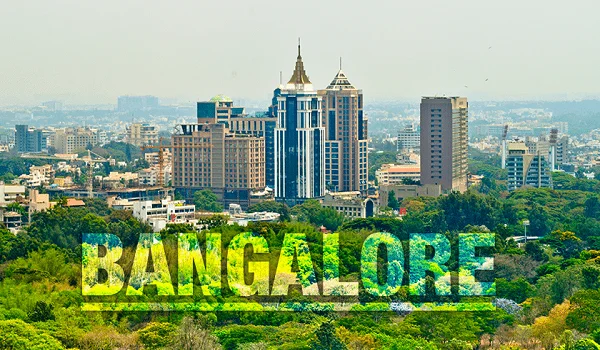
Bangalore

Featured Image of Bangalore


Bangalore, officially renamed Bengaluru in 2014, is the capital of Karnataka and India's best-known technology city. Kempe Gowda I founded it as a mud fort town in 1537, and the 2011 census counted 8,443,675 people inside the city, making it the third most populous in the country. Today it is known as the Silicon Valley of India, and its housing market has grown outwards and upwards with the industry that built it.


Bangalore at a Glance


Detail Value
Founded 1537, by Kempe Gowda I, as a mud fort
Renamed Bangalore to Bengaluru on 1 November 2014
State Capital of Karnataka, on the Deccan Plateau
Elevation 920 m above sea level
Area 741 sq km city, 8,005 sq km metropolitan region
Population, 2011 census 8,443,675 in the city; about 10.45 million in the metro area by 2016
GDP $590.4 billion on a purchasing power basis, 2024 estimate
Climate Tropical savanna, with distinct wet and dry seasons
Nicknames Silicon Valley of India, IT Capital of India, Garden City

How It Started: Old Bangalore


The early city grew around the Pete trading quarters and, later, the cantonment established under British rule. Leafy neighbourhoods such as Malleswaram and Basavanagudi set the tone for how people lived and built here.

Housing meant independent single-family houses, low-rise plots and government-allotted layouts rather than apartment towers. The market moved slowly, stayed affordable and was driven by local families buying homes to live in, not by speculation.

That era earned the city its reputation as a pensioner's paradise, with public-sector undertakings providing much of the steady employment.

The IT Wave and the Shift to Suburbs


Economic liberalisation in the 1990s brought multinational technology firms to the city, and quiet edges turned into employment zones almost overnight. Whitefield in the east and Electronic City in the south grew from villages into office districts through the 1990s and 2000s.

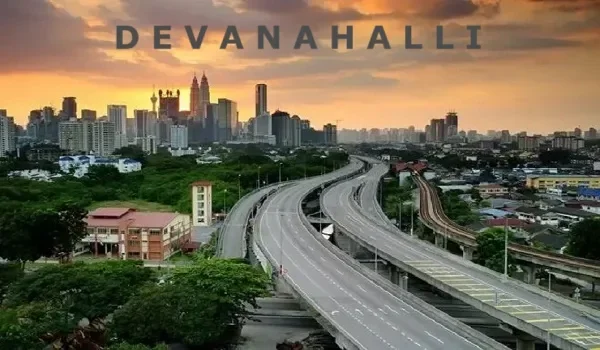
The opening of the new international airport in 2008 then pulled attention north, towards Devanahalli and Yelahanka. Around the same time the Outer Ring Road matured into a corporate spine, lined with campuses at Bellandur, Marathahalli and beyond.

Housing followed the jobs and changed shape with them. Gated high-rise communities replaced plotted layouts as the default, prices rose sharply in the new employment belts, and the built-up area spread further into the suburbs each year.

The Bangalore Real Estate Market in 2026


The market today looks consolidated rather than speculative. Demand comes mainly from end users and from IT and global capability centre staff upgrading their homes, which keeps it steadier than a purely investor-led market.

Three belts carry most of that demand.

  • East: Whitefield and Sarjapur Road, anchored by long-established IT campuses.
  • South and the Outer Ring Road: Bellandur and HSR Layout, close to the ORR office corridor.
  • North: Hebbal and Devanahalli, built around the airport and the aerospace and hardware parks.

Premium gated high-rises and branded residences lead the market in each belt, and they tend to hold both rental demand and capital value better than unbranded stock.

Bangalore Property Prices in 2026


As of September 2026, the city-wide average asking price for apartments is roughly ₹12,100 to ₹12,400 per sq ft. The spread behind that average is wide, from about ₹5,500 per sq ft on the outskirts to ₹25,000 and above in prime central pockets.

Region Area Average asking price per sq ft
East, the IT belt Whitefield ₹10,800 – ₹14,000+
East, the IT belt Sarjapur Road ₹8,000 – ₹13,000
South HSR Layout ₹11,500 – ₹15,000
South Bannerghatta Road ₹7,300 – ₹16,150, averaging about ₹12,150
South Electronic City ₹5,500 – ₹8,000
North Hebbal ₹10,000 – ₹15,000
North Devanahalli ₹5,500 – ₹8,500
Central and premium Indiranagar ₹12,000 – ₹18,000
Central and premium Koramangala ₹12,000 – ₹20,000

Rates have been climbing by roughly 10 to 15 per cent a year, helped by steady IT demand and a shift towards luxury projects. Treat every figure here as an asking price rather than a registered one, and check a recent sale nearby before you rely on it.

What Sits on Top of the Quoted Rate


The per sq ft rate is never the final cost of a home in Bangalore. GST applies to under-construction property, and stamp duty and registration are charged on the sale value at the time you register.

Branded projects usually add other charges too, covering items such as electricity and water connections, generator backup, advance maintenance and a corpus fund. At Prestige Parklane those come to the saleable area × ₹415, plus ₹25,000, with GST, and they fall due at possession.

Why a Branded Launch Can Cost More Than Its Area Average


Devanahalli averages ₹5,500 to ₹8,500 per sq ft across all stock, including plots and older buildings. Prestige Parklane is priced at ₹9,122 to ₹11,404 per sq ft, above that band, which is normal for a new high-rise from a listed developer.

What you pay for at the top of a band is usually the developer's track record, the clubhouse and amenities, and a home that is ready to finance and resell. Compare like with like before deciding a project is expensive for its area.

Bangalore Areas by Character


  • Tech hubs: Whitefield, Electronic City, Bellandur and the Outer Ring Road stretch between them.
  • Established residential: Malleswaram, Basavanagudi, Jayanagar and the cantonment neighbourhoods.
  • Growth corridors: Sarjapur Road in the east, Devanahalli and Bagalur in the north, and Hoskote further out.
  • Education and institutions: Yelahanka, Jakkur and the northern belt, with universities and colleges along the airport road.

Map and Location


Bangalore sits on the Deccan Plateau in south-eastern Karnataka, at 920 m above sea level, which gives it the mild weather it is known for. The city proper covers 741 sq km, while the wider metropolitan region extends across 8,005 sq km.

Growth has been ring-shaped. The Outer Ring Road defines the inner employment belt, the NICE Road runs along the south-west, and the Satellite Town Ring Road now links outer towns such as Devanahalli, Doddaballapur and Hoskote.

Connectivity: How the City Moves


  • Air: Kempegowda International Airport at Devanahalli serves the city from the north.
  • Metro: Namma Metro keeps expanding, and the Blue Line will run 58.19 km with 29 stations to the airport, with its airport section targeted for March 2028.
  • Rail: the city has had railway connections since 1864, with intercity services from its main terminals.
  • Road: NH-44 runs north to the airport, while the ORR, NICE Road and the STRR carry traffic around the city.
  • Bus: BMTC operates the city network, including services to outer towns.

Places to Visit in Bangalore


  • Lalbagh Botanical Garden and Cubbon Park: the two green spaces that gave the city its Garden City name.
  • Bangalore Palace: a Tudor-style palace in the heart of the city.
  • Vidhana Soudha: the seat of the state legislature, and the city's best-known landmark.
  • Bannerghatta Biological Park: a zoo and safari park on the southern edge.
  • Nandi Hills: a hill station north of the city, about 35 km from Devanahalli.

Distances From the Northern Corridor


These distances are measured from Prestige Parklane, in KIADB Aerospace Park Phase 2 at Devanahalli.

Destination Distance Drive time
Kempegowda International Airport 20 km 25 to 30 minutes
Yelahanka 29.4 km 25 minutes
ITPB, Whitefield 39.4 km About 1 hour
Manyata Tech Park 40.5 km About 1 hour
Majestic, city centre 45 km 1 hour 25 minutes

Living in Bangalore's Northern Belt


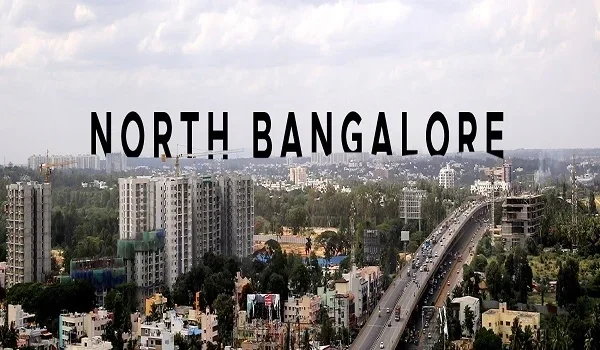
North Bangalore is the newest of the city's growth corridors, and its anchors differ from the eastern IT belt. The airport, the KIADB Hi-Tech, Defence and Aerospace Park and the STRR shape demand here, alongside aerospace, defence and electronics employers.

Prestige Parklane sits inside that aerospace park, on 32.26 acres at Plot No. 24. It holds 1,788 homes in nine towers, priced from ₹56 lakh to ₹1.92 crore, and is registered with Karnataka RERA as PRM/KA/RERA/1251/309/PR/150926/008941, with possession declared for 31 December 2030.

FAQs


1. Why is Bangalore called the Silicon Valley of India?

Because the technology industry that arrived after liberalisation in the 1990s made it the country's largest software and services hub, and it is also called the IT Capital of India.

2. When was Bangalore founded, and by whom?

Kempe Gowda I founded it in 1537 as a mud fort town, and the city was officially renamed Bengaluru on 1 November 2014.

3. What is the population of Bangalore?

The 2011 census recorded 8,443,675 people in the city, the third highest in India, with the metropolitan area estimated at about 10.45 million by 2016.

4. Why is Bangalore's weather so pleasant?

The city stands 920 m above sea level on the Deccan Plateau, and that elevation moderates a tropical savanna climate with distinct wet and dry seasons.

5. Which parts of Bangalore are growing fastest?

Demand concentrates in the east around Whitefield and Sarjapur Road, the south and ORR belt at Bellandur and HSR Layout, and the north around Hebbal and Devanahalli.

6. Is North Bangalore a good place to buy a home?

It suits people working along the airport corridor, in aerospace, electronics or airport services, and it is the belt where the metro Blue Line and the STRR are still being built out.

Enquiry
Enquire Now